More Than a Certification: Building Breastfeeding-Friendly Child Care Across Alabama
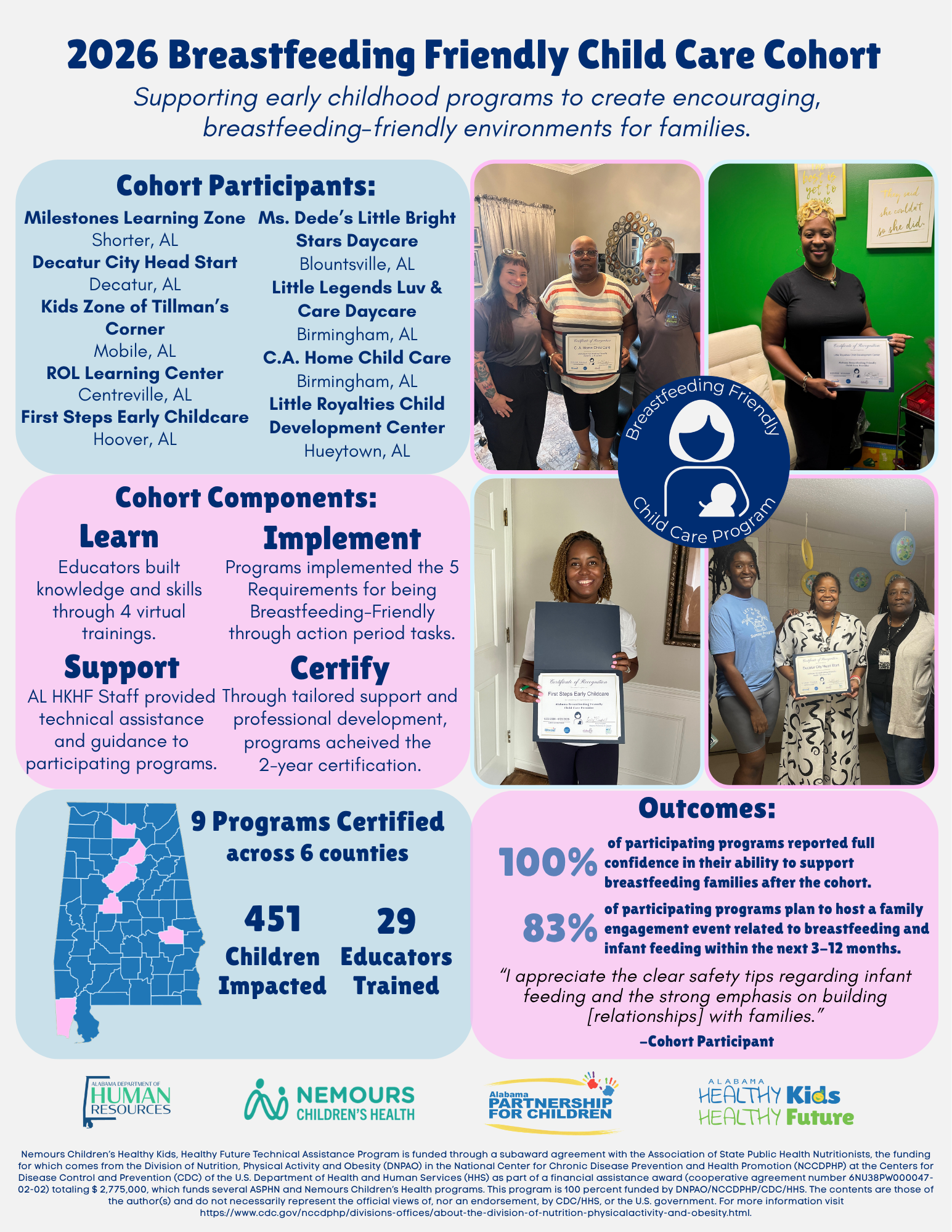
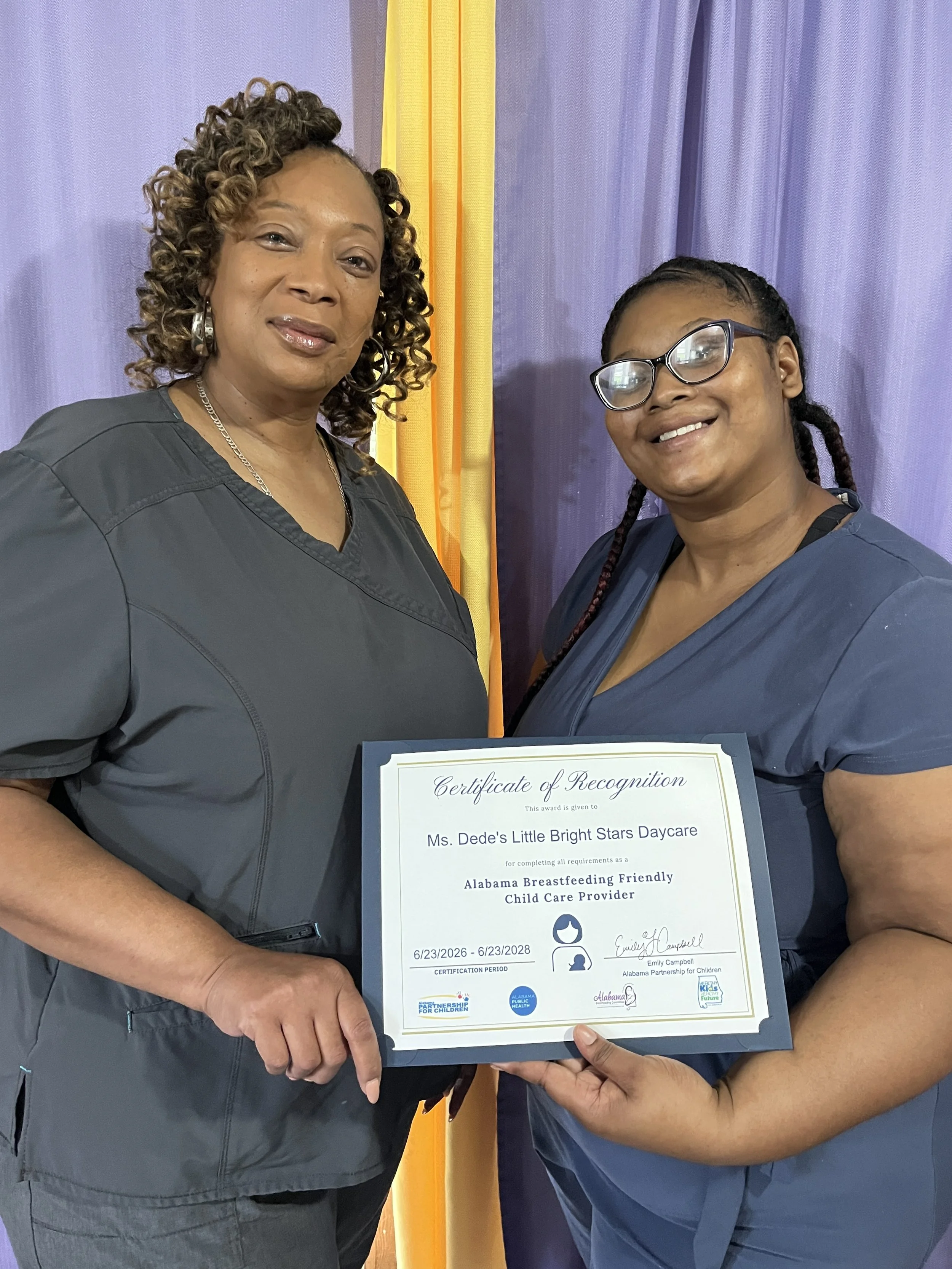
In July, the Alabama Healthy Kids, Healthy Future (AL HKHF) team officially certified nine early care and education (ECE) programs as Breastfeeding Friendly through participation in the second Breastfeeding Friendly Child Care Cohort program. While certification marks an important milestone, the work of these programs goes far beyond earning a designation. Through the cohort, participating programs made meaningful changes to their environments, policies, staff practices, and approaches to family engagement – all with the goal of creating more supportive child care settings for breastfeeding families.
The Breastfeeding Friendly Child Care Initiative is a collaborative effort of the Alabama Department of Public Health’s State Perinatal Program, the Alabama Partnership for Children (APC), and the Alabama Breastfeeding Committee (ABC).
The Breastfeeding Friendly Child Care Certification is a recognition that ECE programs across Alabama can receive after aligning their practices with evidence-based recommendations in five key areas, known as the Five Requirements:
Breastfeeding Friendly Environment
Breastfeeding Policies
Breastfeeding Support Practices
Breastfeeding Education and Professional Development
Breastfeeding and Infant Feeding Practices
To learn more about the Five Requirements, visit our Breastfeeding Programs page. With assistance from AL HKHF or an affiliated partner, ECE programs implement changes into their daily routines, practices, and environments to meet the Five Requirements. Once all five requirements have been met, ECE programs hold the Breastfeeding Friendly designation for two years.
A Unique Approach: The Cohort Model
Unlike the traditional certification process, the cohort program utilized an interactive and collaborative approach for completing the Breastfeeding Friendly Child Care Certification. Rather than working through the requirements independently, participating programs had opportunities to learn from one another, share ideas and challenges, and build connections with other early childhood educators who were working towards the same goal.
Throughout the cohort, participating ECE programs attended four virtual professional development sessions focused on supporting and encouraging breastfeeding, evidence-based breastfeeding and infant feeding practices in ECE settings, and engaging families around breastfeeding and infant feeding.
Between each learning session, programs completed action period tasks designed to move them closer to certification. These included completing the Breastfeeding and Infant Feeding Self-Assessment, identifying and making policy and environmental changes based on their results, and evaluating their current family engagement efforts.
After completing the self-assessment, participants received access to the Breastfeeding Friendly Child Care Toolkit, AL HKHF's official guide to completing and maintaining the certification requirements. AL HKHF staff also provided direct technical assistance throughout the cohort, helping programs navigate the certification process.
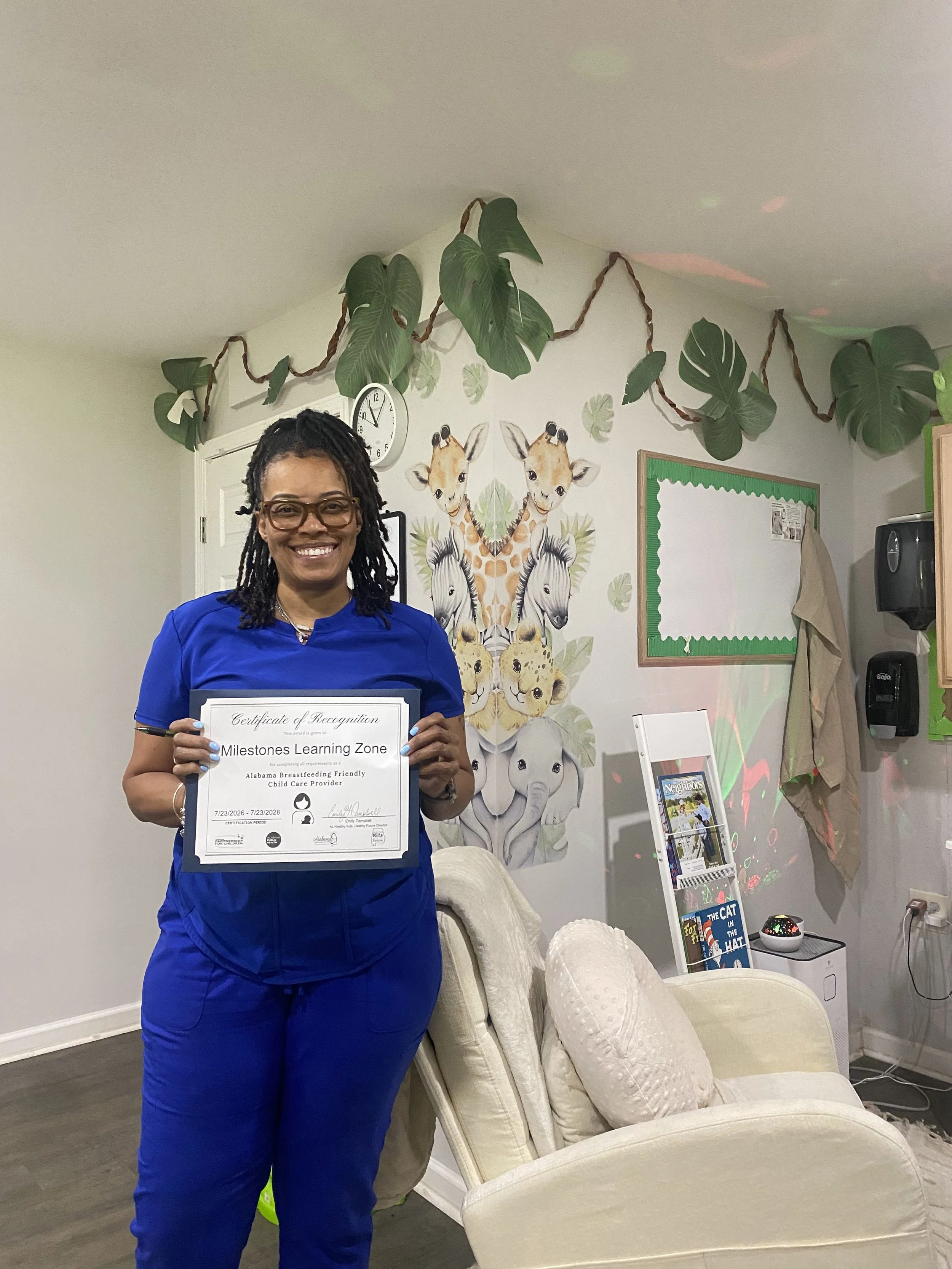

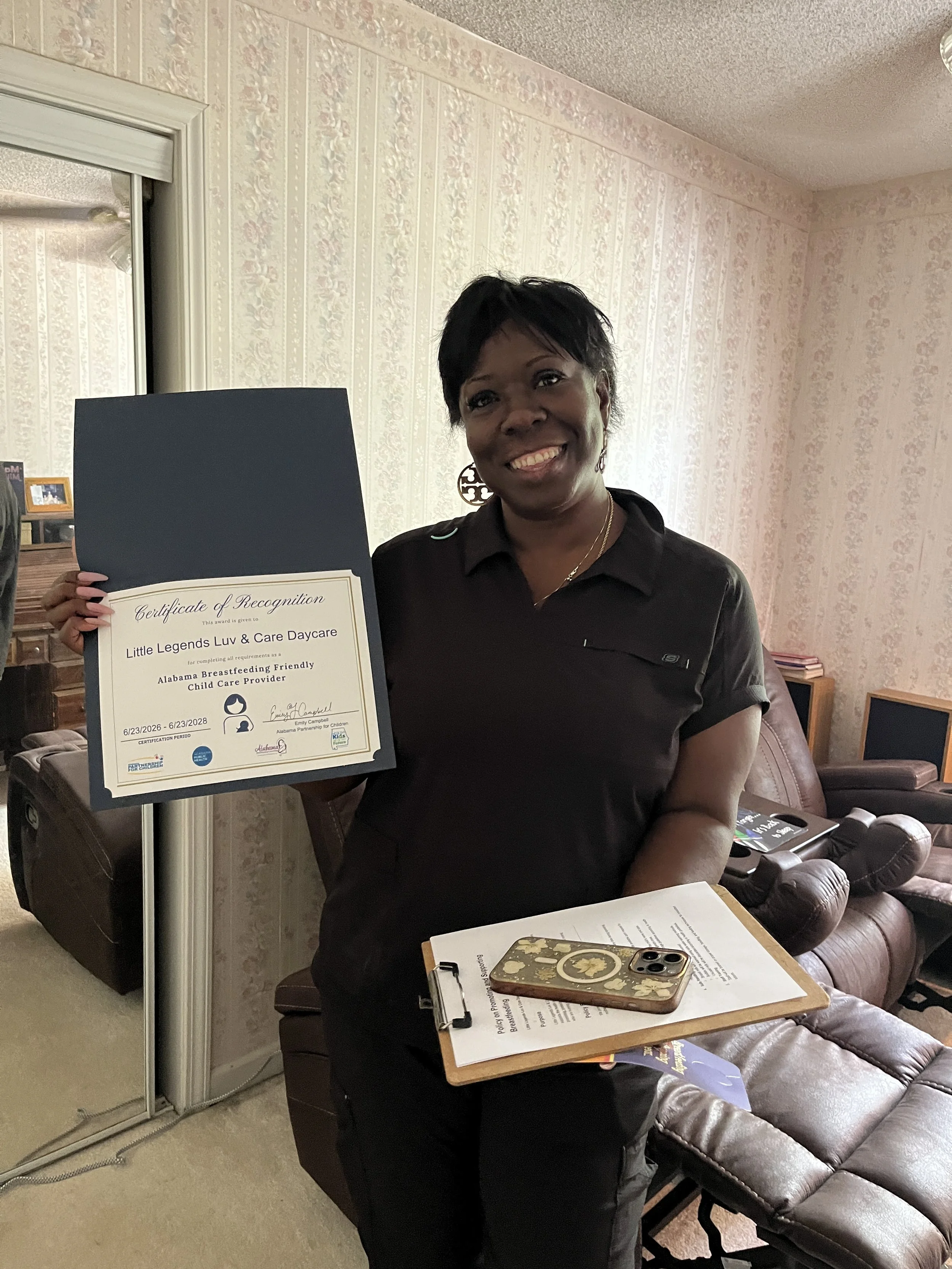
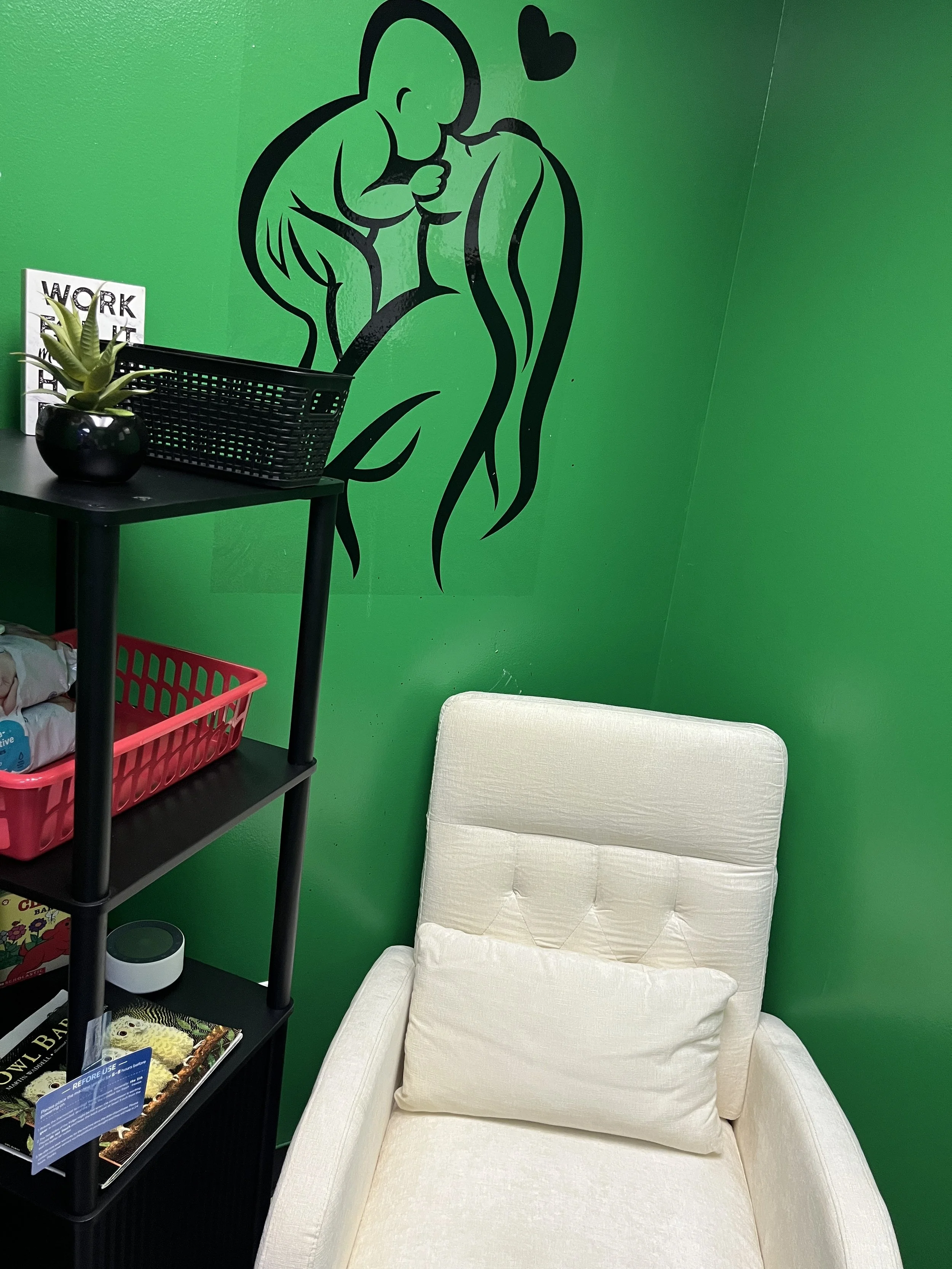
One of the most tangible changes made during the cohort was the creation of dedicated breastfeeding spaces within participating programs. After successfully completing the first two learning sessions, programs could request materials to create a comfortable and private space for breastfeeding or pumping. Materials included comfortable seating such as gliders, mini refrigerators for breast milk storage, room dividers for privacy, sound machines to create a calming environment, and other supplies. With these resources, each participating ECE program was able to create a welcoming space where families and staff could breastfeed or pump while at the program.
These spaces represent more than a physical change to the child care environment. They send a clear message to families: breastfeeding is welcomed, supported, and valued here.
Program Results
For participating programs, the cohort was more than a pathway to certification – it was an opportunity to build knowledge and confidence. Among evaluation respondents, average knowledge of breastfeeding-friendly practices increased from 2.7 out of 5 before the cohort, to 4.8 out of 5 afterward. All respondents reported feeling highly confident in their program's ability to support breastfeeding families moving forward. The impact also extended to program staff. All evaluation respondents reported that staff attitudes or confidence toward supporting breastfeeding families had improved, with participants describing the change as "tremendous" and sharing that their staff were excited to become more breastfeeding-friendly providers.
The cohort also helped programs look beyond certification and toward continued family engagement. Five of the six evaluation respondents indicated that their program plans to host a family engagement event focused on breastfeeding and/or infant feeding within the next 12 months. These future events provide an opportunity for programs to continue building connections with families and extending breastfeeding support beyond the child care classroom.
Participants highlighted a range of experiences as particularly valuable, from learning how to introduce breastfeeding support to families to understanding paced feeding, breast milk storage and handling, and best practices for creating a breastfeeding-friendly environment. Others emphasized the value of the cohort's virtual learning sessions and the opportunity to receive practical information and resources they could bring back to their programs.
The results reflect not only increased knowledge, but also a positive experience for participating programs. All evaluation respondents rated their satisfaction with the Breastfeeding Friendly Child Care Certification Cohort at 5 out of 5. For these programs, the certification process became an opportunity to learn, make meaningful changes, and build greater confidence in supporting breastfeeding families.
Nemours Children’s Healthy Kids, Healthy Future Technical Assistance Program is funded through a subaward agreement with the Association of State Public Health Nutritionists, the funding for which comes from the Division of Nutrition, Physical Activity and Obesity (DNPAO) in the National Center for Chronic Disease Prevention and Health Promotion (NCCDPHP) at the Centers for Disease Control and Prevention (CDC) of the U.S. Department of Health and Human Services (HHS) as part of a financial assistance award (cooperative agreement number 6 NU38PW000047-02) totaling $ 2,775,000, which funds several ASPHN and Nemours Children’s Health programs. This program is 100 percent funded by DNPAO/NCCDPHP/CDC/HHS. The contents are those of the author(s) and do not necessarily represent the official views of, nor an endorsement, by CDC/HHS, or the U.S. government. For more information visit https://www.cdc.gov/nccdphp/divisions-offices/about-the-division-of-nutrition-physical-activity-and-obesity.html.